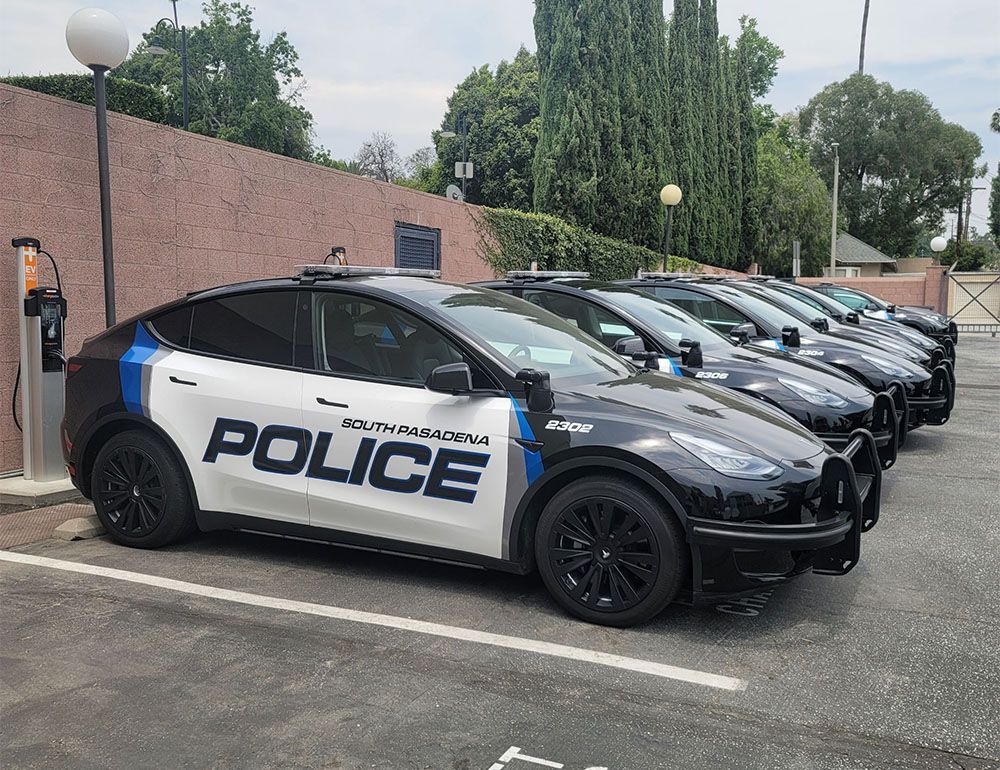
EV Charging Stations in School Districts, Corporate Yards and Fleets
At EVCharge4U, we install EV charging stations for schools, for fleet and delivery services, and for city and corporate yards. Many municipalities and utility companies are changing over to electric cars and trucks, and their corporate yards need charging infrastructure to support that transition.
Rising Demand from Fleets and Corporate Yards
We have seen a huge increase in RFPs for the corporate yard and fleet side. There are so many RFPs out there right now for cities, counties, and water districts, as well as other utilities that are moving their fleet vehicles to EVs and need EV charging stations.
Here are a couple of case studies:
Case Study: San Rafael School District
Schools are another area where EV charging makes a real difference, and our work with the San Rafael school district, in Marin County, California, is a good example. We are the charge point operator and helped the district develop its system. During the day, their staff can charge their vehicles. Then, after hours, people from the neighborhood can come and charge. That makes it possible for people to charge their cars at night. Because schools are often located right next to homes in densely populated neighborhoods, it is a win-win for both sides, and it keeps the air cleaner overall around the schools.
The school district has roughly 8 to 10 schools with approximately 10 charging stations. Altogether, that comes to about 99 charging stations. They run from the elementary schools all the way to the high school, and they are spread out across San Rafael and its neighborhoods. That is what makes it possible for people to charge their car at night.
Turning Charging Stations into Revenue
Charging stations at schools can be used to generate more revenue for a school district. In San Rafael, people can access EV charging stations at schools after hours and pay with their credit card, and that money goes to the San Rafael School District.
There is an important financial reason this matters for a property like this. When you have a transformer from PG&E, you also have a monthly fee. You want to make sure that you go net zero, so that you are not simply paying PG&E without making enough revenue to cover it. Letting the community charge after hours helps with that. It helps everything.
Flexible Pricing for Different Users
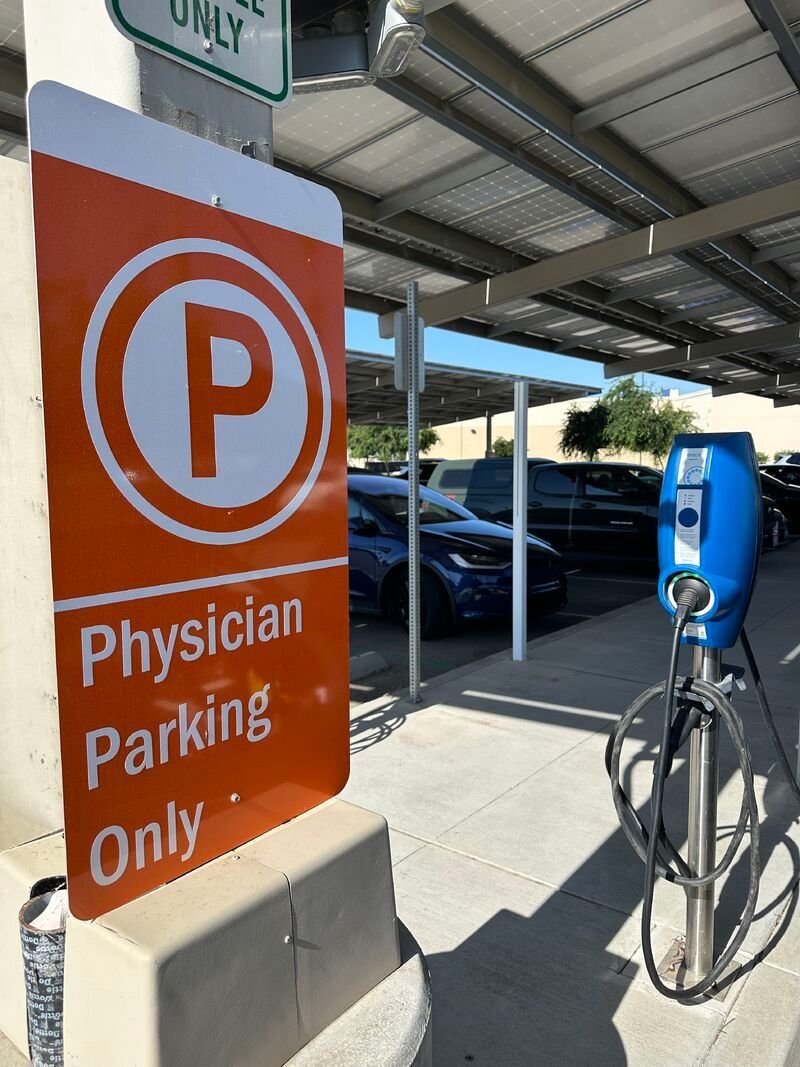
With a payment system behind the charging stations, the pricing can also be flexible. You could set up a flat rate or set it up so that staff charge for free or receive a discount, while people from outside pay the standard price you choose. It is all possible. We know of a hospital a few hours north of us where:
- The doctors get free charging
- The rest of the staff who work there get a discount of around 20 percent
- The public pays full price
All of that is possible with these charging stations once you have a payment system behind them.
Taking Over After Shell Recharge Stepped Back
We took over the San Rafael School District charging stations after Shell Recharge stepped back from operating third-party charging stations in the United States. Because we are one of the few people who know how to work with EV box charging stations, PG&E recommended us. We also maintain the public EV box charging stations at PG&E sites. So when Shell exited, all of those EV box stations needed a new operator, and we were able to take them over and provide the maintenance.
Why OCPP Open-Protocol Charging Matters
That situation points to something important about how we protect our clients, and it comes down to OCPP. This is exactly why we like OCPP. When an operator like that leaves, an open protocol is what lets us step in. We are very brand agnostic. As long as a charger supports OCPP, we can come in and switch it over if you do not like your provider, or if your provider ups and leaves. That way the customer is still satisfied and still has something that works for them.
When Providers Leave the Market
The industry has changed a lot in recent years, and several providers have left. When JuiceBox shut down its North American operations in October 2024, its customers were left holding infrastructure that they had paid for and that could stop working. Some people called us and had us remove the old equipment and replace it with a different brand that was open source and could be connected to a different provider.
Open Systems vs. Proprietary Networks
With an open system, the hardware that is installed and the back-end system are separate. With JuiceBox and some other providers, the equipment and the back end are tied together, and that is what you are required to use. That locks in customers, business owners, and homeowners on a single platform. It does not allow them the flexibility to change something they do not like.
We see this most often with brands that run a proprietary network. In some apartment buildings, they lock everything down and there is nothing you can do. Your only options are to put a whole new brand in, which means everyone needs a new charger, or to switch the existing chargers over to a new operator. In our case, we can often point out that a charger still has a couple of years of life left in it. So why not switch it over to EVCharge4U as your charge point operator? In the meantime, you can plan your budget so that you have the money later to change the chargers out. Sometimes there are even incentives available to help swap the chargers. That is what happened with the JuiceBox situation, where there was funding available to help people switch over.
The Freedom to Switch Providers
This is the biggest problem we run into with clients, and it is why we prefer OCPP. It is an open protocol. If you do not like your provider, the situation works a little like deciding you no longer want one cable company and would rather switch to another. You simply have someone come over and switch it over. You do not have to buy everything again. If your current provider stops doing business, as we have seen happen across the industry, OCPP gives you the ability to change, because you are not locked in.
The Role of Load Management
There is one more capability that makes charging possible for many of our clients, and that is load management. It is one of the most valuable tools we have as installers, and it is often what makes it possible for people to charge at all.